Heavy Traffic Rider Car Game
GlobalApps HRacing
4.4139.00 Reviews
- Version
- 0.7.6
- Installs
- 10.00M
- Age Rating
- Everyone
Screenshots
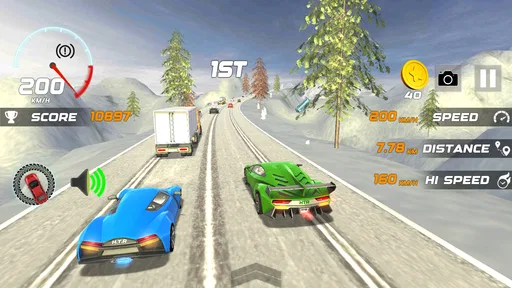
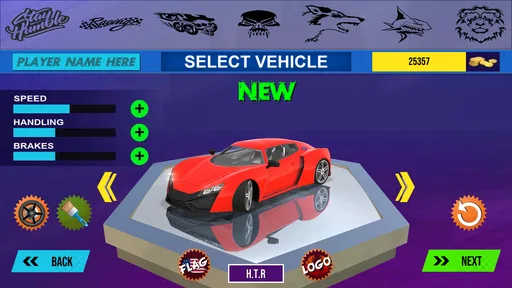
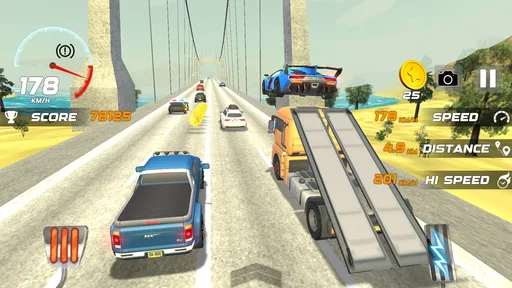
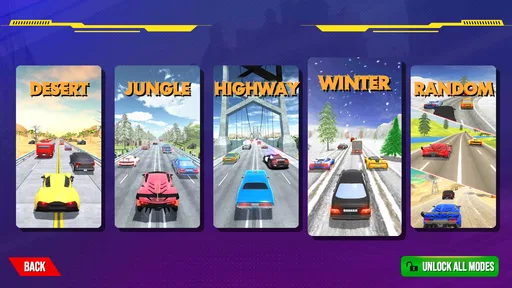
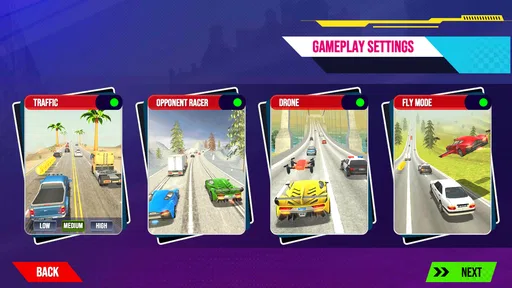
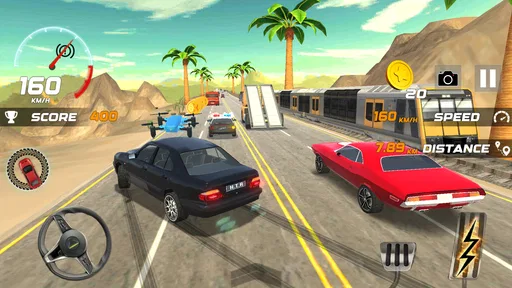
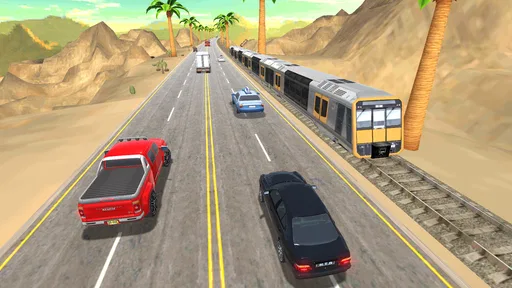
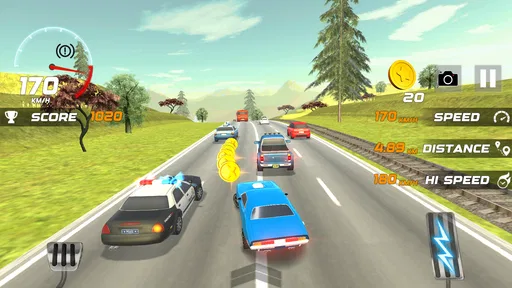
Our Review of Heavy Traffic Rider Car Game
 Analysis by Appyee
Heavy Traffic Rider Car Game is a free racing game built around one simple idea: staying alive and moving quickly while traffic keeps getting in your way. I found it most enjoyable in short sessions, when I wanted something immediate rather than a deep racing simulation. It does not ask me to learn a large set of systems before I can start driving, and that directness is its main appeal. At the same time, players looking for realistic handling, extensive customization, or a carefully developed career experience may find it too limited.
Published by GlobalApps H, the game sits in the racing category and is suitable for Everyone. It has been available since October 31, 2016, and the current version is 0.7.6. Its broad appeal is reflected in a 4.4 average from roughly 56 thousand ratings and more than 10 million installs. Those figures suggest that the basic traffic-racing formula works for a large audience, but they do not change my main conclusion: this is best treated as a quick, accessible driving game rather than a full replacement for a console-style racer.
How the traffic-focused racing works in practice
The central challenge is not simply reaching a finish line. The road itself becomes the opponent. I have to judge gaps, adjust speed, and decide whether a risky move is worth the extra progress. That makes each run feel more active than a standard straight-line driving game, even when the controls remain easy to understand.
The strongest part of the experience is the constant decision-making at close range. A vehicle ahead may leave a tempting opening, but moving into it too quickly can turn a promising run into a collision. I found that gentle corrections are usually more useful than dramatic swerves. The game rewards attention to the traffic pattern, not just fast reactions.
That distinction matters for new players. Someone can pick it up without already understanding racing games, yet there is still a small learning curve in judging speed and distance. During my early attempts, I was more likely to fail because I committed to a gap too soon than because the controls were confusing. Once I started looking one or two cars ahead instead of focusing only on the nearest obstacle, my runs became noticeably more controlled.
The real skill is reading traffic before the gap appears. That is a useful habit in this particular game. Rather than waiting until a vehicle blocks the route, I began identifying the next safe lane and preparing my movement early. This makes the action feel less random and gives careful players a way to improve without relying entirely on reflexes.
Why short sessions suit it so well
I would recommend playing it when I have a few spare minutes: during a break, while waiting for an appointment, or when I want a quick change of pace after a longer game. The uncomplicated premise means I can return after several days without needing to remember a complicated story or progression system. That low commitment is one of its practical strengths.
A realistic everyday session might look like this: I have a short train ride and want something that can be started immediately. I play a few runs, concentrate on keeping a clean line through traffic, and stop after a particularly good attempt. The game fits that situation better than a large racing title that expects a longer uninterrupted session.
It also works for players who enjoy repeating a challenge to improve their personal consistency. The satisfaction comes from making fewer mistakes, choosing safer openings, and maintaining control for longer. If I am in the mood for a relaxed game with no pressure, however, the traffic can feel demanding because the road constantly requires attention.
Controls, pacing, and the importance of restraint
The driving feels most manageable when I use small movements. Overcorrecting is the easiest way to lose control, especially when two traffic vehicles create a narrow passage. I learned to treat every opening as a choice rather than an invitation. Sometimes the better move is to remain behind a slower vehicle briefly instead of forcing a pass.
This creates an interesting trade-off between safety and momentum. Taking every available gap can make a run feel exciting, but it also increases the chance of an abrupt failure. Choosing a conservative route may look less impressive, yet it often produces a more satisfying result because the success feels deliberate.
Players who prefer immediate speed should be aware that the game’s traffic focus can interrupt the sensation of smooth racing. The road is not just a space to accelerate through; it is a sequence of obstacles that repeatedly changes the best route. I enjoyed that tension, although I can see why someone expecting open, uninterrupted racing might become frustrated.
A practical tip is to use the first part of a run as a reading phase. Instead of chasing the most aggressive move immediately, I watch how the traffic is arranged and settle into the control rhythm. This reduces careless collisions and helps reveal whether the current attempt is worth pushing or better treated as practice.
What makes it different from ordinary racing alternatives
Many racing games focus on competition against visible opponents, track layouts, or vehicle tuning. Heavy Traffic Rider Car Game places more emphasis on navigating a crowded route. That gives it a different kind of tension. I am not mainly trying to outbrake another racer at a corner; I am trying to preserve a safe line while the surrounding traffic limits my options.
This makes it a better choice than a conventional racing game when I want a quick obstacle-reading challenge. It is less suitable when I want organized races, detailed car preparation, or a strong sense of progression between events. A traditional circuit racer offers clearer goals and more structured competition, while this game’s appeal depends on the immediate pressure of the road.
It also differs from endless driving games that are designed primarily as relaxing scenery experiences. Here, traffic is not decoration. It is the reason to keep playing. Every vehicle changes the route, so the player remains involved even when the visual setting itself is familiar.
The meaningful limitation: repetition and a narrow focus
The same focused design that makes the game accessible also limits its long-term variety. Once I understood the basic rhythm of watching gaps and making controlled movements, the experience became more predictable. The challenge can remain enjoyable, but it depends heavily on whether I like repeating the same core activity and trying to perform it more cleanly.
This is not a minor issue for every player. Someone who expects a broad selection of cars, a substantial campaign, or a large collection of racing modes may feel that the game does not offer enough change. I would not choose it as my only racing game if I wanted a long-term hobby with many different ways to play.
The free entry point is helpful, but optional purchases range from $0.29 to $2.99 per item. I would approach those purchases carefully. The game’s basic appeal comes from the driving challenge itself, so I would first spend time deciding whether the repeated traffic runs are genuinely enjoyable before considering any optional item. For a casual player, paying is not necessary to understand whether the core experience fits.
Another point to consider is the age of the release. Since it first appeared on October 31, 2016, players accustomed to newer racing games may notice a simpler presentation and a less ambitious overall structure. That does not make it unusable, but it does set the right expectation. I approached it as a straightforward mobile game, and that made its limitations easier to accept.
Who should install it, and who should skip it
I think it is a good fit for someone who wants a free traffic racing game with an uncomplicated premise and quick attempts. It is especially suitable for casual players, younger users within the Everyone rating, and people who enjoy improving through repeated practice rather than following a long narrative.
It may also suit players who like games that test attention without demanding a complicated control scheme. The useful challenge is deciding when to move, how aggressively to pass, and when patience is safer. Those choices give the simple format more depth than the store summary alone suggests.
I would skip it if my priority were realistic vehicle physics, competitive multiplayer, a detailed garage, or a substantial career mode. I would also look elsewhere if I disliked repeating similar runs after learning the basic pattern. A more feature-rich racing alternative would be a better investment of time for someone who wants structured championships or extensive car management.
For parents and younger players, the Everyone rating makes the game broadly approachable. Even so, I would still pay attention to the optional purchase range and decide whether in-app buying should be restricted on the device. That is a practical consideration whenever a free game offers paid items, especially if several people use the same phone or tablet.
Small techniques that improve the experience
My first recommendation is to stop treating speed as the only measure of a good run. A controlled pass that keeps the route open is often more valuable than a reckless move that looks fast for a moment. This shift makes the game less frustrating and gives each attempt a clearer purpose.
Second, I would avoid making decisions based only on the nearest car. Traffic ahead can close a route immediately after the first obstacle, leaving no time to recover. Looking beyond the immediate gap helps me choose a lane that remains usable for longer and reduces the need for sudden corrections.
Third, I would use failed attempts as information rather than simply restarting in frustration. If I repeatedly collide while changing direction, the problem may be timing rather than the route itself. If I fail only when trying to pass several vehicles in succession, a slower approach may be the better strategy. This kind of self-review is where the game offers more value than its very simple premise suggests.
Finally, I would play in short focused sessions instead of forcing a long one. Attention drops quickly when every moment requires judging distance, and tired play makes the traffic feel unfair even when the real problem is impatience. A brief break can make the next run feel more readable.
Device expectations and practical setup
The listed minimum operating-system requirement is version 7.1, so the game is aimed at a wide range of older and newer mobile devices that meet that baseline. I would still keep expectations realistic: compatibility does not automatically mean that every device will provide the same smooth experience. Background apps, available storage, and general device condition can affect how comfortable any mobile game feels.
Because the game is designed around quick reactions, responsiveness matters more here than it would in a slow puzzle game. If controls feel delayed or the screen is difficult to read, traffic gaps become harder to judge. Closing unnecessary background apps and playing on a device with a responsive display is sensible, particularly when attempting longer runs.
The current version, 0.7.6, is the version I would look for when installing. Keeping the app updated through the normal platform store is also the simplest way to ensure I am using the available release rather than an older copy. I would avoid unofficial downloads, since they can create unnecessary security and compatibility risks.
My final recommendation
Heavy Traffic Rider Car Game succeeds because it understands the value of a focused idea. It turns ordinary traffic into the main source of tension, gives me quick attempts, and rewards patience as much as speed. I especially like the way a seemingly open gap becomes a judgment call: take it now, wait, or prepare for the next lane.
Its weakness is equally clear. The experience is narrow, and players who need variety, realism, or a large progression system will probably outgrow it. The free format and optional purchases make it easy to try, but I would not spend money until I knew that repeating traffic runs held my attention.
My verdict is positive with a specific qualification: this is a good pick for quick, focused traffic dodging, not a complete racing simulator. I would recommend it to a friend who wants a simple mobile challenge that can be played in short bursts and improved through better judgment. I would point a serious racing fan toward a deeper alternative instead. For the right audience, though, the straightforward design is not a flaw; it is exactly what makes the game easy to return to.
Verdict
Strengths of Heavy Traffic Rider Car Game
- Simple controls make it easy for beginners to start driving.
- Traffic-dodging gameplay offers quick, engaging sessions.
- Multiple cars provide variety as you progress.
- Offline play is convenient when you have no internet access.
- Lightweight gameplay runs smoothly on many older devices.
Limitations of Heavy Traffic Rider Car Game
- Repetitive road environments can make longer sessions feel monotonous.
- Frequent ads may interrupt gameplay between attempts.
- Vehicle upgrades can require considerable time or in-game currency.
- Limited driving realism may disappoint simulation-focused players.
- Some controls feel less responsive at high speeds.
Similar Picks in This Category
View All
Hill Climb Racing
Fingersoft4.3

Dr. Driving
SUD Inc.4.2

Traffic Rider
skgames4.5

Asphalt 8 - Car Racing Game
Gameloft SE4.6

Race Master 3D: Car Racing
Beresnev Games4.6

Extreme Car Driving Simulator
AxesInMotion Racing4.3
Frequently Asked Questions
What is Heavy Traffic Rider Car Game?
Heavy Traffic Rider Car Game is a traffic-focused driving game built around weaving through busy roads while maintaining control at high speed. Instead of following a traditional racing circuit, you typically earn points by overtaking vehicles, surviving dangerous situations, and completing driving objectives. Its appeal comes from quick reactions, close passes, and progressively more challenging traffic conditions.
How do you play Heavy Traffic Rider Car Game?
The main gameplay is based on steering your vehicle through dense traffic without crashing. Depending on the selected mode, you may need to travel a certain distance, reach a target score, or complete missions while managing speed and positioning. Controls are generally designed for mobile screens, using touch or tilt input, so new players should begin carefully before attempting aggressive overtakes.
Can Heavy Traffic Rider Car Game be played offline?
The game may allow some driving modes to work without a constant internet connection, which is useful when playing during travel or in areas with limited coverage. However, advertisements, updates, online features, leaderboards, and certain promotional content may require an active connection. It is best to open the game once while online and check which modes remain available after switching to offline play.
Is Heavy Traffic Rider Car Game free to download and play?
Heavy Traffic Rider Car Game is generally offered as a free download, allowing players to start driving without paying an upfront purchase price. Free mobile games commonly support their development through advertisements and may include optional purchases, such as removing ads, unlocking vehicles, or obtaining in-game currency. Review the store listing and purchase settings before downloading if you prefer a completely unrestricted experience.
What devices are compatible with Heavy Traffic Rider Car Game?
Compatibility depends on the version available through the Android or iOS store, as well as your device’s operating-system version, processor, storage, and available memory. Modern phones and tablets should usually handle the game more comfortably, while older devices may experience slower loading, reduced graphics quality, or occasional stuttering. Check the official store requirements before installation and keep enough free storage for updates.
Play our best games!


